
3 Days in Chengdu Itinerary: The Best Things to Do in Chengdu, China
Out of all the cities we’ve visited in China, Chengdu is honestly my favourite. Okay, maybe it’s a tie with Shanghai for now! But for a city that only established itself as a new tier one city last decade, it’s made a name for itself in so many aspects that draw people like myself in.
Chengdu is the home of the adorable giant pandas, the birthplace of the world-famous Sichuan cuisine, and where the China’s tea culture really boomed millennia ago. It also offers a great balance between modern city life and historic must-visit neighbourhoods, it’s one of China’s most relaxed and fascinating cities and makes a fantastic base for exploring more of Sichuan, like the colourful valley of Jiuzhaigou.
We visited Chengdu back in 2019 with family, but this time in 2026, we went back to really soak it in and do all the best things in Chengdu that a first-time visitor should have on their itinerary.
Over three days, you’ll get to meet China’s most adorable residents, eat your way through Sichuan cuisine, wander historic streets, sip tea like a local and experience some of Chengdu’s most fascinating cultural sites.
How Many Days Do You Need in Chengdu?
I would honestly treat Chengdu like many other large cities around the world that have much to explore. Three days and four nights, to us, is the perfect middle ground, and it will give you enough time to see the pandas, try our favourite Sichuan specialties, explore the historic alleys and nature parks as well as visit the modern landmarks.
Is 3 days enough for Chengdu?
Three full days is enough for a first visit, especially if you’re seeking to prioritize the major highlights. Two days is doable but might feel rushed and tiring. Four to five days is definitely better if you want to do other day trips or slow your pace to enjoy more tasty eats, do some shopping, and more. But for us, three days was the ideal amount of time to take on our full itinerary.
Sichuan has a lot more to offer outside Chengdu, whether you’re considering the picturesque valley of Jiuzhaigou, the underrated and adventurous “Last Shangri-La” of the Yading mountains, or even the cyberpunk city of Chongqing that has gone viral in recent years. So three days is just the right amoung to spend in Chengdu if you have more to tackle on your China itinerary.
Best Time to Visit Chengdu
Before I tell you which time of the year we personally love and would recommend for visiting Chengdu, let me break down what to expect each season.

Spring — March to May
- Average temps: 13–23°C (55–74°F)
- Rainfall: Moderate, increasing through May
- One of the best times to see pandas, it’s the perfect weather for sitting outside at a traditional teahouse and still cool enough to enjoy hotpot. You can expect thinner crowds, especially earlier in the spring.
- Overall: One of the best seasons to visit. Mild, comfortable and increasingly green.
Summer — June to August
- Average temps: 24–26°C (76–79°F), with highs around 28–31°C
- Rainfall: Very high, especially July and August
- A good time to see the pandas, though you’ll want to go early in the morning when it’s cooler, but definitely not as comfortable to enjoy the outdoor teahouses or hotpot. It’s also so much more crowded than during the shoulder season.
- Overall: Hot, humid and rainy. Still doable, but not my first choice.
Fall — September to November
- Average temps: 13–22°C (55–72°F)
- Rainfall: High in September, then drops considerably
- Excellent time to see the pandas, tea time in the parks is perfect and so is hotpot, especially later on in the fall. It also gets less crowded later in the season.
- Overall: One of the best times to visit, especially October and November.
Winter — December to February
- Average temps: 6–10°C (43–50°F)
- Rainfall: Low, although the city is often cloudy and damp
- Excellent time for the pandas as cooler temps mean they can be particularly active, perfect cozy-weather for tea and the ultimate hotpot season. The crowds are fewer, but the gloomier sky may be less appealing.
- Overall: Cold and often grey, but relatively dry. Great if you don’t mind bundling up.
My take is that late spring (April-May) and late fall (October-November) are the best seasons to visit Chengdu. Summer is gruelling in heat and crowds, and winter is just not as appealing, mostly because the rest of Sichuan isn’t as colourful during this season either. We were in Chengdu in early October (in 2019) and in late April (in 2026) and both were very pleasant times to visit. Although, out of the two, spring is my favourite, as the weather is milder yet sunnier, and increasingly green and blooming with colour.
But the dates you absolutely need to avoid are:
- Chinese New Year (typically late January to February)
- May Labour Week (May 1-5)
- Golden Week (October 1-7)
These are the absolute busiest times, of the year besides summer, where everyone in China is on holiday and trying to travel in the country.
How to Get to Chengdu
Flying to Chengdu
If you’re flying into Chengdu, you’ll either arrive at the Chengdu Tianfu (TFU) International Airport, or the Chengdu Shuangliu (CTU) International Airport, depending on your departure city and airline. Shuangliu is the more convenient airport to land in, as it’s only 16km (roughly 30 minutes) southwest of downtown Chengdu, and well situated to take the metro to your hotel.
We flew in and out of TFU, both when arriving internationally and leaving domestically, even though we flew Asiana Airlines and Sichuan Airlines, respectively. It took a bit longer to get into the city, but our Didi (China’s rideshare app) ride was affordable and mostly on the highway.
Getting to Chengdu by Train
Chengdu is very well connected by China’s high-speed rail network. If you find it more convenient or time efficient to take the train from your departure city, especially if you’re coming from nearby like Chongqing or Zhangjiajie, then you should definitely consider it. The best platform to book train tickets online and in advance as foreign travellers in China is trip.com. It makes it so much easier and your train tickets are directly linked to your passport, which is the piece of ID you’ll need with you to enter the gate for your train at the railway station.
Coming into Chengdu, there are four railway stations: East, North, South and West. Out of the four, Chengdu East Railway Station is the main hub, handling most of the high-speed trains to and from the large national cities of China. No matter what, make sure to check your ticket to see which station you’re arriving in, or departing from when you leave Chengdu.
How to Get Around Chengdu
Getting around Chengdu is made very easy with China’s efficient public transportation and with the ease of finding taxis and Didi rides all over the city. Chengdu’s metro system is very cheap and convenient, and hailing a Didi is super useful when attractions aren’t conveniently located near a station. We opted to ride the metro when we travelled further distances, like towards the Dujiangyan on Day 3, but hailed a Didi to make sure we arrived early at the Panda Research Base on Day 1.
If you don’t yet know how to go about using public transit in China’s cities, or how to call a Didi, don’t worry! I explain it all in detail in my China travel guide, so make sure to read up on it before you go.
Where to Stay in Chengdu
Chengdu is a large city, so choosing the right neighbourhood can make a big difference in how much time you spend getting around. These are some of the best areas to consider:
- Chunxi Road/Taikoo Li: One of Chengdu’s most central and convenient areas, with endless restaurants, shopping, nightlife and easy access to public transportation. It’s a great choice for first-time visitors who want to be within walking distance of many of the city’s attractions.
- Tianfu Square: Located right in the heart of Chengdu, this area puts you close to People’s Park, museums, shopping and several major metro lines. It’s particularly convenient if you want a central base for exploring different parts of the city.
- Kuanzhai Alley: Stay here if you’d prefer a more historic atmosphere, with traditional architecture, charming alleyways, teahouses and restaurants right outside your door. It’s a particularly atmospheric area in the evenings once the historic streets light up.
- Wuhou District: This area is ideal for travellers interested in Chengdu’s history and culture, with easy access to Wuhou Shrine, Jinli Street and plenty of local restaurants. It’s a little removed from the modern city centre, but still well connected.
Where We Stayed in Chengdu
We stayed right on Chunxi Road at the Hampton Inn by Hilton Chengdu Chunxi Road, and the location couldn’t have been more convenient. Being so central meant we could walk to plenty of attractions and restaurants, with great food literally just steps from our hotel. We also had easy access to public transportation when we wanted to venture farther across the city, while quick DiDi ride-hailing from our hotel lobby made getting around incredibly quick and affordable when we didn’t feel like taking the metro. For a first visit to Chengdu, we really loved having everything we needed right outside our door.
3-Day Chengdu Itinerary
We’ve gone through the main gist of how to plan your trip to Chengdu, but now let’s plan how to spend your time in Chengdu!
Day 1 — Pandas, Tea Shopping, Tianfu Art Museum & Chunxi Road
Morning at the Panda Research Base
First things first, you have to see the pandas. We weren’t wasting any time to go visit the Panda Research Base to see giant pandas and red pandas for the first time. The doors to the Panda Research Base open at 7:30am in the summer months (March to October) and 8:00am in the winter months (November to February). Because it opens quite early and we wanted to line up ahead of time to beat the crowds, we did skip out on our complimentary hotel breakfast. Plan ahead and pack some food our light snacks with you if you are someone who prefers to have a morning meal.
There are two entrances to consider when visiting the pandas: the south gate and the west gate. The south entrance is closer to most of the giant panda villas, which are mostly conglomerated in that southern area. It is also closer to the red pandas, as well as both the giant panda and red panda delivery houses. So this means that the south entrance is the more popular gate to enter.
The west entrance, on the other hand, because it is some walking distance from most of the panda sanctuaries, is a quieter access point. Keep this in mind if you’re visiting Chengdu during a busy season.
As we were here on April 20th and away from any major holidays or weekends, it was honestly fairly quiet (for China). Not to mention, we were also here on a Monday, and one thing to know about Monday’s in Chengdu, is that quite a few attractions may be closed. And that also goes for seeing the beloved Internet sensation, Huahua. She broke the Internet with her adorable onigiri-shaped face, gentle personality and spunky interactions with her caretaker, Grandpa Tan.
So if you did want to have the chance to see Huahua (even though the line may be long and the window of time to see her may be short), avoid coming to see the pandas on a Monday.
To reach the majority of the panda villas sooner, while the crowds were thin and the pandas were most active, we decided to come through the south gate. It only took us about 10 minutes to walk along the paved paths and boardwalks to see our first panda, Ao Ao! We spent a lot of time watching him do his morning walk around his sanctuary, as we were so enamoured with seeing our first panda ever, but little did we know, a lot of the pandas were out on this cool morning.
Next to him, we found Jin Shuang, a female panda who was sitting in the funniest position, eating her bamboo and later rubbing her butt against a tree! We encountered more pandas in their own living quarters, most of them solo, some young and some older, some chilling and some being fed by the caretakers.
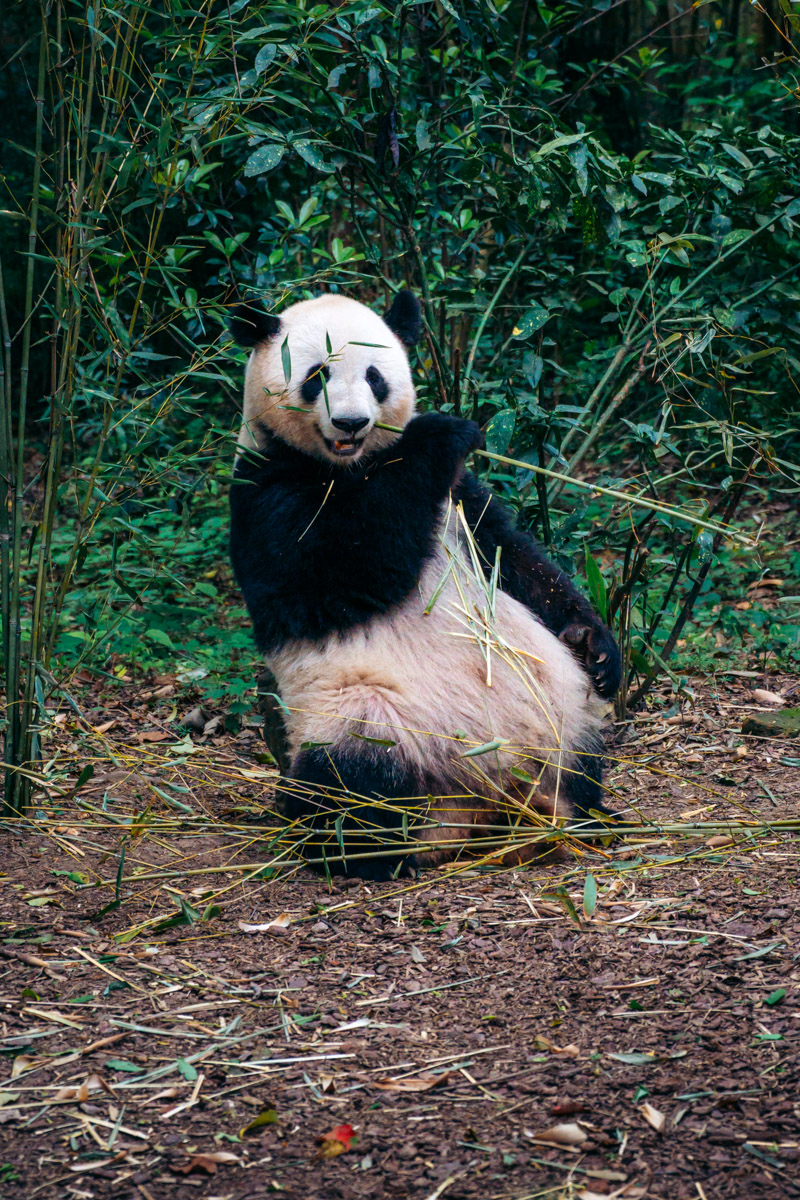
But our absolute favourite was the trio at the end of our time at the base, a mom named Zhi Zhi with her two cubs, Zhi Shu and Zhi Hua.
They looked so silly and were the entertainment of the hour, lying down lazily in different corners, or sometimes together, munching on their bamboo, scratching themselves like little fluffy drunkards.
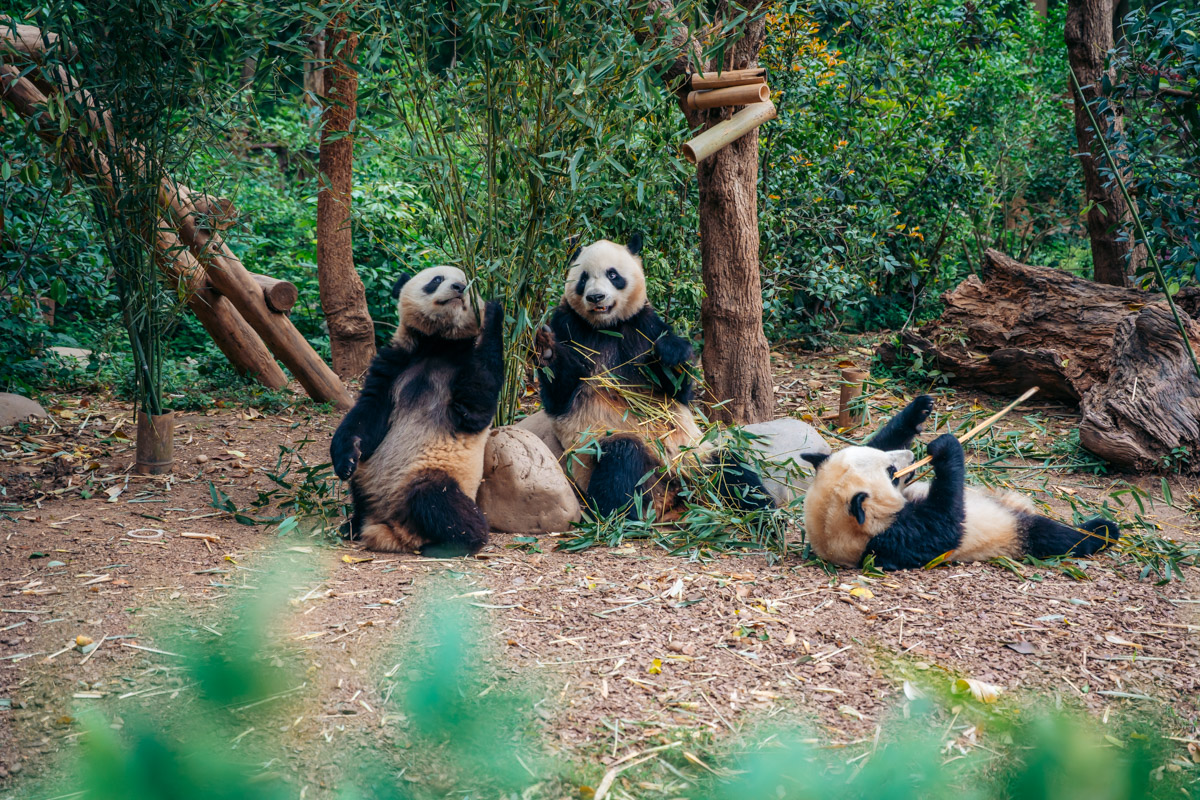
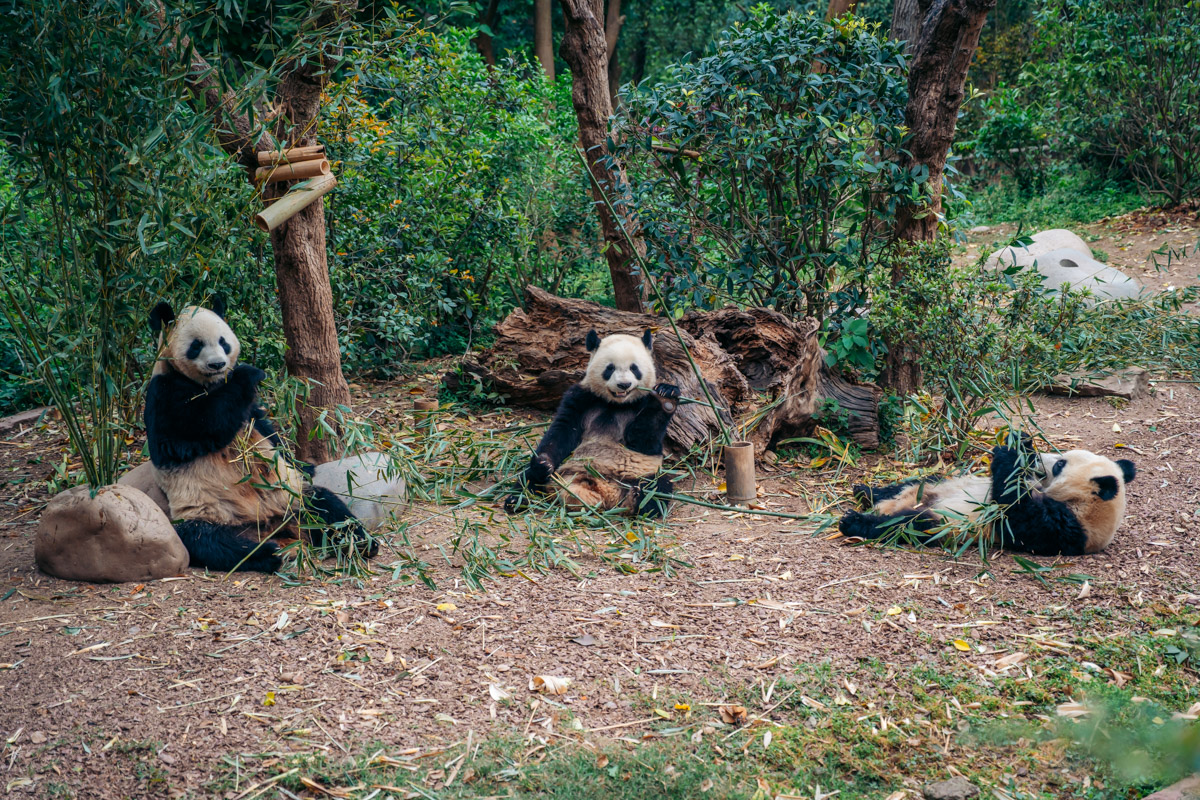
But as much as I love my giant pandas, I found the red pandas to be so much cuter. They just have the cutest, round and expressive faces and thick, fluffy tails, and they seemed to be so much more playful with each other. We visited the main red panda enclosure where many of them were out, climbing trees, wrestling with each other and tumbling around. But we also went into the quiet red panda nursery house, where we could get up and close with the cuties who were being fed their morning meal at the time.

We spent a good two hours at the Panda Research Base, which was sufficient for us as we got to see all the action we hoped to see in that amount of time. But you could easily spend half a day, or even a whole day, here if you wanted. It was approximately around the Moon Giant Panda Nursery House where we turned back and returned towards the south entrance. We grabbed a quick meal of fresh beef and potato curry with rice before we called a Didi for our next spot in Chengdu.
Shopping at the Wukuaishi Wholesale Tea Market
One thing I couldn’t leave Sichuan without bringing home was our very own batch of premium tea. I mean, we were in the heart of where tea drinking was born over 4,000 years ago. There are plenty of tea shops across the city, selling variations that are budget-friendly to extremely high-end, but I was looking for the best value I could find.
Wukuaishi Wholesale Tea Market isn’t exactly a bazaar style market like we expected, but a street lined with private tea shops that sell all sorts of teas in bulk, as well as tea paraphernalia. Because it wasn’t a market experience where you stroll around trying different teas at stall after stall, it was a little tricky committing to one tea shop only without doing a comparison. But in the end, we settled on one shop called Chunlu (??) that seemed welcoming enough with an array of teas in massive bags ready for tasting.
We sat down during our tasting and I already had a list of teas I wanted to try going in, which I recommend you have as well. As I love Oolong tea, I found out prior that the Meng Ding green teas are similar in taste and fragrance. They’re sweet smelling and open up to have chestnutty undertones which seemed really intriguing. The lady helping us sample gave us a few green teas to try that fit the profile I wanted, as well as their line from the Meng Ding mountain range—one called the “Ming Qian Chun Lu”, or the pre-Qing Ming festival spring dew tea. It was so good that we ended up buying 250g of it.
Next ones I wanted to try were some Sichuan origin black teas (or in Chinese they call them red teas). She offered us to try some more premium ones which were phenomenal, but we ended up loving the “Hua Xiang Si Chuan” and bought 100g to bring home. This one was about 2.5x the price of our green tea, but still so worth it.
It was a fun and intimate experience, as the lady attending us was really passionate about tea as an art form. Each tea has very specific ways of drinking it, with how many tea leaves you use, how hot the temperature, what type of cup or glass you would drink it out of, how many steeps you can get out of it and even whether you keep the tea leaves in your drinking cup or strained in a separate tea cup. I also appreciated that the shop wasn’t fighting for our business or trying to upsell us on their products. It was very much a “take it or leave it” situation while making sure our needs were met.
Afternoon at the Tianfu Art Park
One of our favourite areas in Chengdu to take an outdoor stroll is the Tianfu Art Park. It’s one of the quietest large outdoor settings we’ve probably ever visited in China, and it was impeccably clean. The Tianfu Art Museum is its best attraction, and offers free public access (although it isn’t open on Mondays like I mentioned before). It showcases modern and contemporary art including Chinese paintings, large indoor pieces and outdoor art installations, and even multimedia and video exhibitions.
The museum’s building in itself is an art piece, with its curved and fanning roof resembling a hibiscus flower, which is actually Chengdu’s official flower.
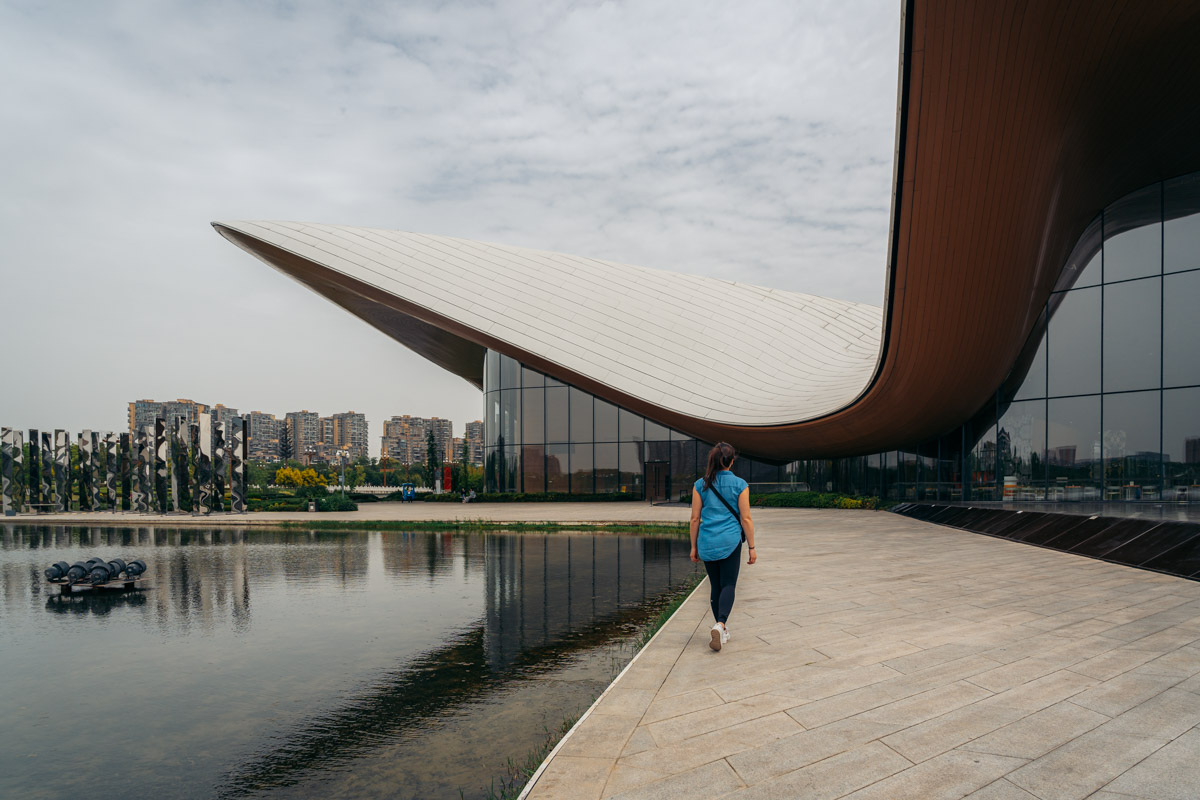
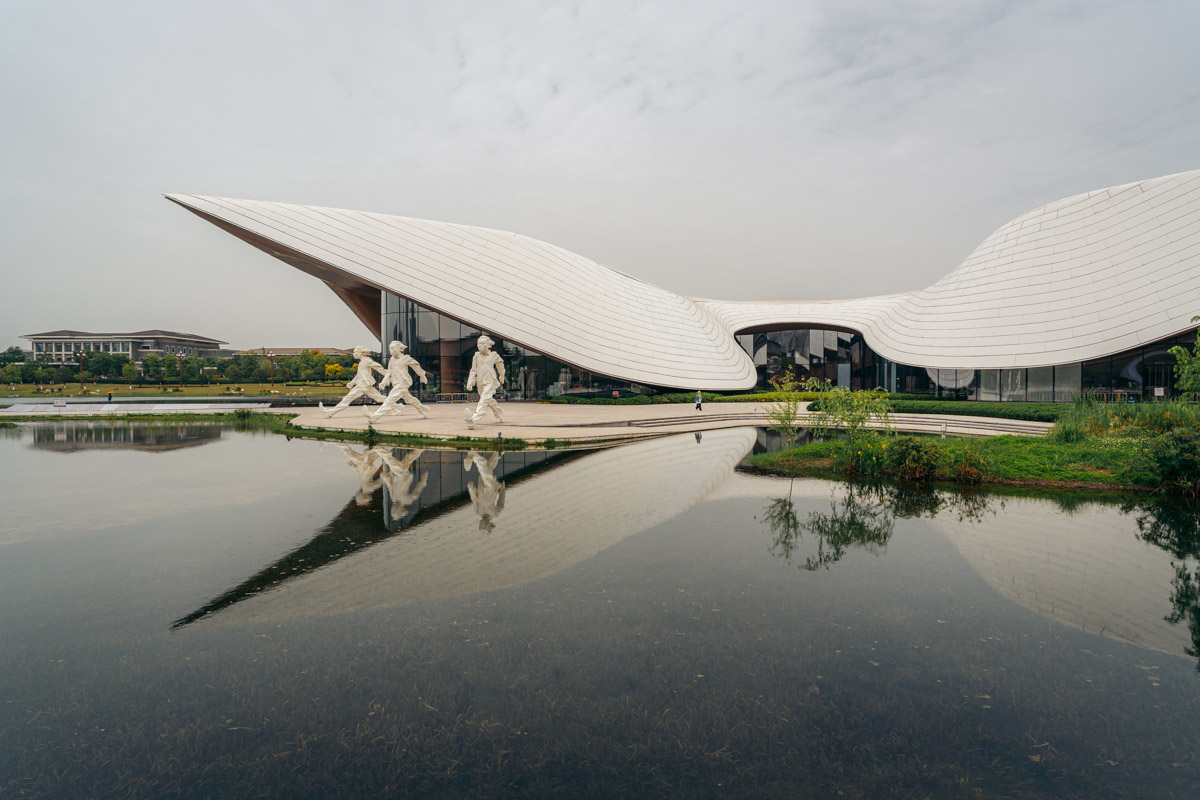
There’s a calm manmade pond here and grassy park that is perfect for picnicking, but a number of new restaurants and popular retail shops populate the district opposite the museum. This is where we decided to have lunch.
Shoolongkan Hotpot Lunch
Shoolongkan (or Xiao Long Kan) is a very popular hotpot chain that we wanted to try in Chengdu. I know, I would typically say to go with the local option, but sometimes it’s nice to have the tried and true too. The service wasn’t fantastic, I’ll be honest (until the end) but the food was everything we needed it to be.
When in Sichuan, you have to go for the mala hotpot, no question about it. I know, it’s spicy, but at least give it a try if you can. I’ll go into more detail about all the food and what mala is at the end of this itinerary, but for now I’ll tell you that we got three soup bases: mala, tomato and mushroom. The tomato soup base is always my favourite and the mushroom soup base is a soothing, clear base and helps balance the acidity and spice of the other two we got.
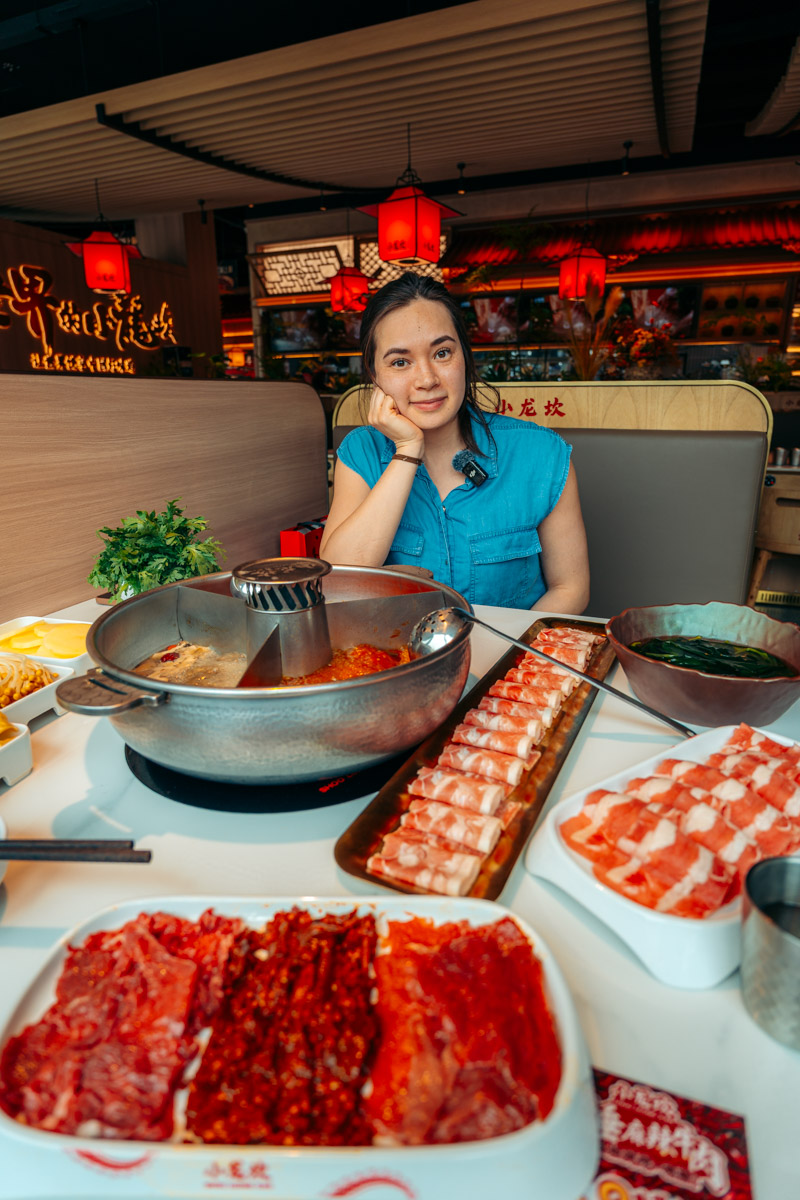
The hot pot is divided into three sections for each soup base. While the kitchen was preparing it, before they brought it to our table’s stovetop, we went to grab our sauces. For my sauce, I love to load it with sesame or peanut butter (depending on which they have), soy sauce, sesame oil, some vinegar, minced garlic, green onion and cilantro, and sha cha sauce (Chinese barbecue sauce) if they have it.
For the raw ingredients, we love ordering a variety of meets, especially lamb and beef, as well as lotus root, seaweed, mushrooms or wood ear, finishing off with some noodles (glass noodles are the best) and our leafy greens. You want to cook and eat all the meats first, throwing in the fungi and starchy ingredients throughout, but ending with the noodles and veggies. This allows for the broths to absorb the flavours of the meats and allow them to soak into the later ingredients.
I won’t lie, Shoolongkan was one of the best hotpot experiences we’ve ever had, besides a few times we’ve dined with family in China. To top it all off, I was really obsessed with the sweet white tea and oolong they provided as our table drink. So much so, that I asked the manager where they get it. But since they said there wasn’t a way for us to source it, they gave us free tea bags of it instead! As well as a packaged hotpot soup base to bring home. That made my day.
Evening Street Foods Along Chunxi Road
With the food babies we were carrying, we headed back to our hotel to rest up for the remainder of the afternoon before coming back out to venture Chunxi Road in the evening. It is shopping galore on this pedestrian street, but it also offers so much delicious food!
Just around the corner from the Hampton is this popular buns and dumplings place called Guibaozi, where we got the most delicious potsticker wontons for a surprisingly good price. We got spicy chicken bites, matcha ice cream cones, massive skewers of grilled gizzards and squid, butter roasted mochi and top notch Portuguese style egg tarts. More of the food vendors are located right across from the IFS mall, which you’ll spot pretty well when you see the King Kong sized panda scaling the building.
There are countless well known Chinese milk tea chains here, and we absolutely loved the aesthetic and drink choices at Li Shan Shan Cha. I had something like an osmanthus crispy brown rice milk tea, and with every purchase they give you a baggy of crunchy peanut snacks!
Anshun Bridge at Night
If you’re hungry enough for a sit down meal, there are tons of local restaurants with street seating that line the the streets from Chunxi Road to the Fuhe River.
Walking along the Fuhe riverfront was one of our favourite pastimes at night as everything was lit up under a dark sky and in pleasantly cooling weather (at least in April, it was). There are tons of little souvenir shops and bars along here, and where there are large squares and plazas, you’ll see group after group of middle-aged folks and seniors doing their dance workouts altogether.
After about 20 minutes along the river and possibly joining in on the dance jams, you’ll come up to the view of the beautifully lit Anshun Bridge reflecting against the calm river with quiet wooden sightseeing boats passing underneath—a picture perfect sight to end our first night exploring Chengdu.

Day 2 — People’s Park, Historical Alleys & Bamboo Water Towers
Start at Tianfu Square
We started our second day in Chengdu by walking through Tianfu Square, the massive central plaza in the heart of the city. Even beneath Chengdu’s typically gloomy skies, the square was surprisingly colourful, with flowers blooming throughout the garden.
A bright yellow dragon sculpture spiralled high into the sky at one end of the square, while a statue of Mao Zedong stood prominently across the street. I’ll admit, it still amazes me that Mao continues to be so prominently memorialized throughout China given the devastating consequences of his rule.
From Tianfu Square, we continued on foot towards one of Chengdu’s most beloved green spaces: Renmin Gongyuan, or People’s Park.
Relax at Heming Teahouse in People’s Park
If there’s one place where you can really experience Chengdu’s famously laid-back culture, it’s People’s Park.
The park itself is beautiful. It’s incredibly lush, with winding paths, ornate stonework and greenery seemingly enveloping you at every turn. We could have easily spent hours wandering around here, but we had one very important destination in mind: Heming Teahouse.
Sitting beside the pond, we ordered a pot of Sichuan tea and settled in to experience one of Chengdu’s most iconic pastimes: drinking tea. But this isn’t your average tea service.
The servers at Heming Teahouse are practically performers themselves. When serving certain teas, they use incredibly long-spouted teapots, pouring the tea from several feet away while spinning and balancing the pot with impressive precision. The ceremony is suitably named Kung Fu Tea Art, and legend says that it dates back to the Three Kingdom period (220-280 BCE). Watching them gracefully swing that ridiculously long spout over the tables without spilling a drop was honestly half the fun.
We opted not to purchase the tea ceremony package ourselves, but it was still fascinating watching the tables around us receive the full performance. The tea isn’t exactly cheap by Chengdu standards. We paid around ¥60 for a pot to share, but I’d say it’s worth doing at least once. You’re paying as much for the experience and atmosphere as you are for the tea itself.

Find the Steaming Milk Tea
As we continued wandering through People’s Park, we stumbled across a main street within the park lined with stalls selling souvenirs and light street eats. And, much to my delight, I finally found the milk tea I’d been hunting for all over Chengdu!
The drink itself? Honestly, nothing particularly special. The presentation is what makes it worth buying.
When you order it, your milk tea comes with a tiny clay teapot, or another figurine of your choice, attached to the lid. The vendor adds dry ice inside, creating a stream of “steam” that makes the little teapot look like it’s actually brewing. It’s completely gimmicky, but also ridiculously cute! And unlike a lot of touristy souvenirs, it’s something I actually use for decor. The little teapot now sits in our tea station at home. At around ¥18–23, I’d say it’s a pretty fun little Chengdu souvenir to go with your milktea.
Wander Through Kuanzhai Alley
From People’s Park, we continued toward Kuanzhai Alley, one of Chengdu’s most famous historic neighbourhoods.
The name literally means “Wide and Narrow Alleys,” referring to the two main pedestrian streets that run through the area. Together with the surrounding courtyards and traditional Qing Dynasty architecture, they’re a fun place to wander without much of an agenda.
This is also where you’ll find plenty of:
- ? Sichuan snacks and street food
- ?? Souvenir shops, from high-end and unique to budget-friendly knick-knacks
- ? Teahouses
- ? Traditional architecture
- ? Plenty of photo opportunities
It can get busy, especially in the middle of the day, but I think it’s worth experiencing despite the crowds. The Kuanzhai Alley was my favourite place and most memorable time from our trip in 2019, and it still measured up to that memory.
Lunch at Chen Mapo Tofu
After a lot of walking throughout the morning, we ended up back on Chunxi Road for lunch at Chen Mapo Tofu Restaurant before an afternoon rest at our hotel. Chen’s is very well known for mapo tofu, and if you know anything about Sichuan cuisine, this dish is one of the best.
We loved every bite we had here, the mapo tofu was popping with flavour, and might’ve been a little heavier on the salty side which is why you always want to order it with a side of plain rice. It was so rich and umami from the fermented bean paste and ground meat, and we had a couple more dishes to balance it out.
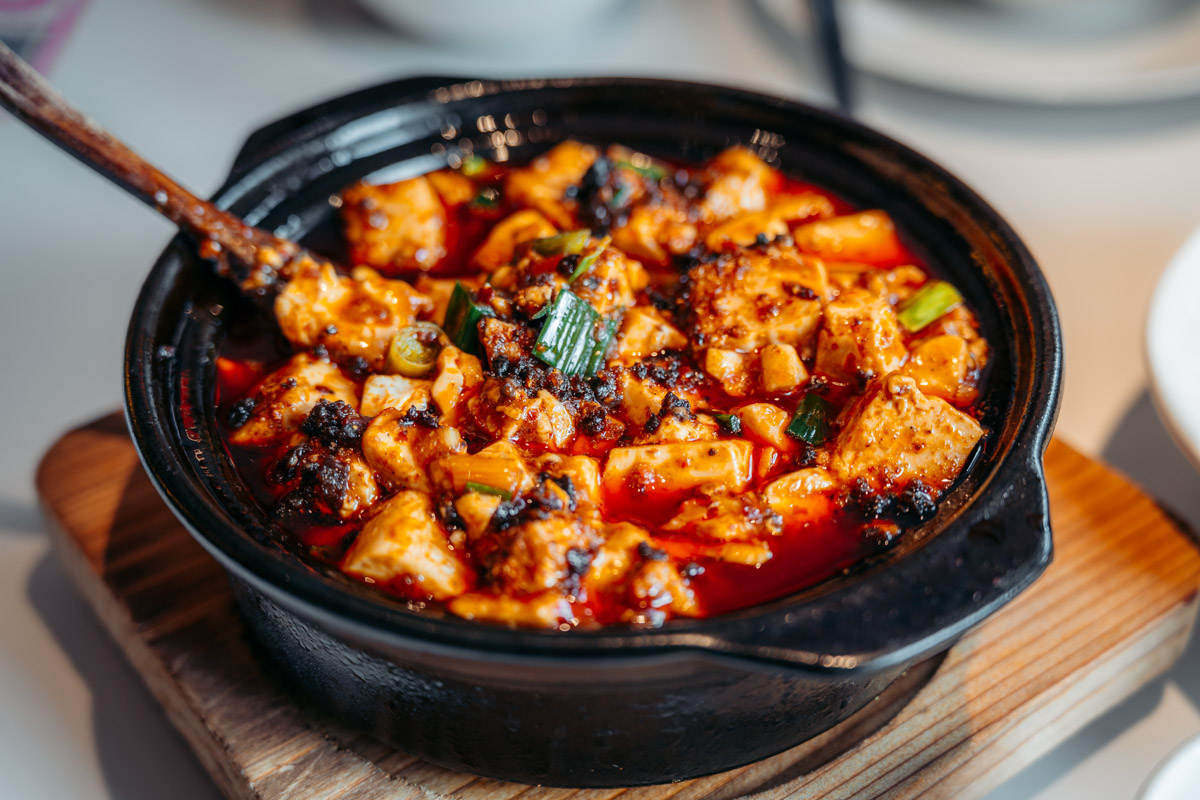
We order a cold squid dish which was in a light vinegar sauce with some spice from chilli, and a steamed perch fish which one of the best Chinese fish dishes we’ve ever had. The white fish was smooth, soft and buttery, and dipping it in the light sweet sauce (with Oyster sauce being a prime ingredient) made all of our taste buds come alive.
Both the fish and the mapo tofu were so similar to how Jason’s mom makes them, but with their own Chen twist!
Visit Jinli Street & Wuhou Shrine
Later in the evening, we went back south to Jinli Street, a lively pedestrian area filled with traditional-style buildings, lanterns, food stalls and shops. It’s touristy, but it’s also a fun place to grab some snacks and wander around before visiting the Wuhou Shrine.
Jinli Street is similar to Kuanzhai Alley, though it feels like the street is broader with a taller profile with more two-storey buildings and tall trees. It felt less crowded than Kuanzhai, even though we were here at a prime evening time when people want to enjoy the street food.
We indulged in some snacks and drinks before making our way around to the Wuhou Shrine entrance. The shrine is one of Chengdu’s most important historical sites and a fascinating place to learn about the Three Kingdoms period. Its complex is beautifully landscaped, with traditional buildings, gardens and ancient cypress trees making it feel much more peaceful than you might expect in the middle of a major city.
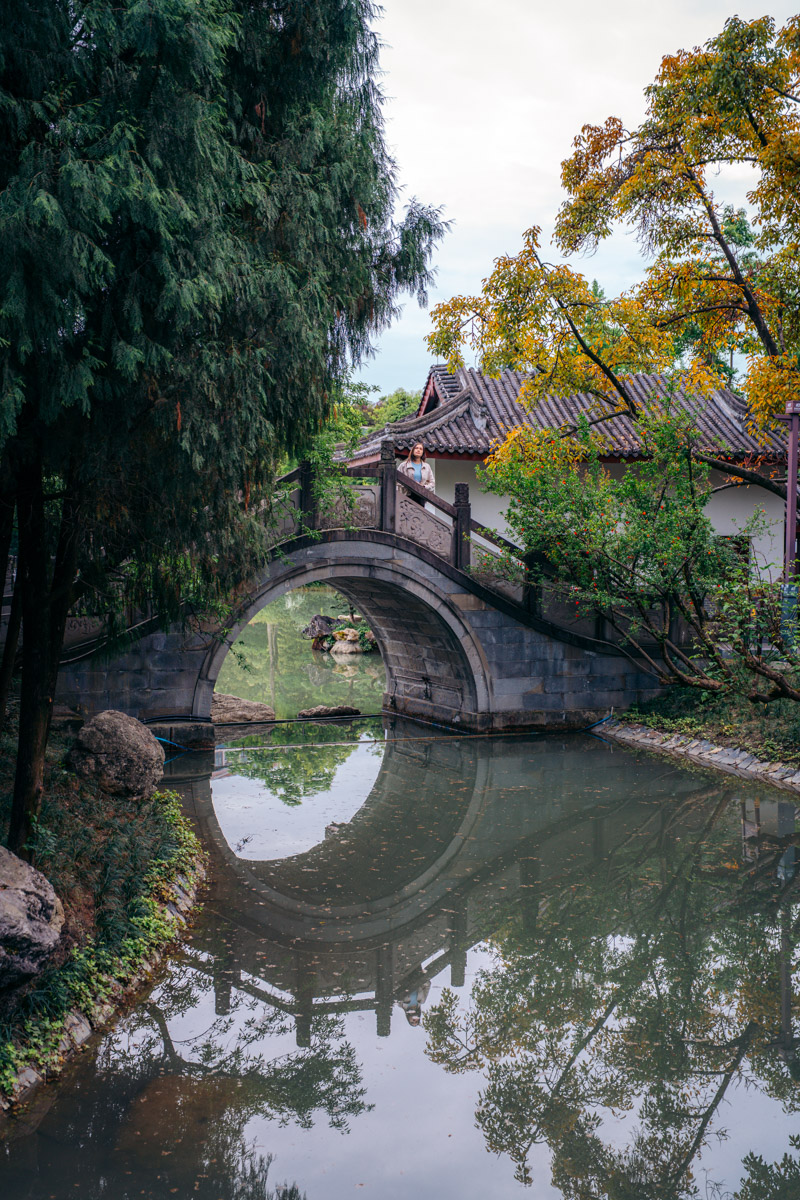
Even though we didn’t enter the shrine, we loved the quiet park that surrounded it. Surprisingly, so few people were strolling through it which we didn’t take for granted. We walked through the gardened paths and along the water where we found a captivating arch bridge that we had all to ourselves.
End the Day at the Tower of Vitality at SKP
We ended our day at one of Chengdu’s more unexpected modern attractions: the bamboo water towers at SKP Chengdu.
We spent the evening at the New Century Global Centre, which is the massive mall right across from the outdoor SKP Mall, and it brought back a lot of memories from our previous trip visiting family. We grabbed a bite to eat and did some shopping while we waited for the night sky to fall.
Soon after, we made our way across the street to SKP and followed the wave of people and the sound of falling water. The Bamboo Water Towers were a lot smaller than I had expected, but they were close enough that we could almost walk right up to them and feel the cooling mist on our faces.
A small but open area and path wraps around the towers, giving you plenty of different angles to admire the installation. Each tower changes colours in perfect synchronicity, creating an impressive light show against the night sky.
On one side, shallow reflecting pools make the towers look even more grandiose. This was also one of our favourite spots for photos, especially with the silhouettes of other visitors reflected in the water. Just be prepared to get a little wet if you decide to walk in between the columns! Any breeze can send the water streams drifting across the walkway, making this the spot where you’re most likely to get an unexpected shower.
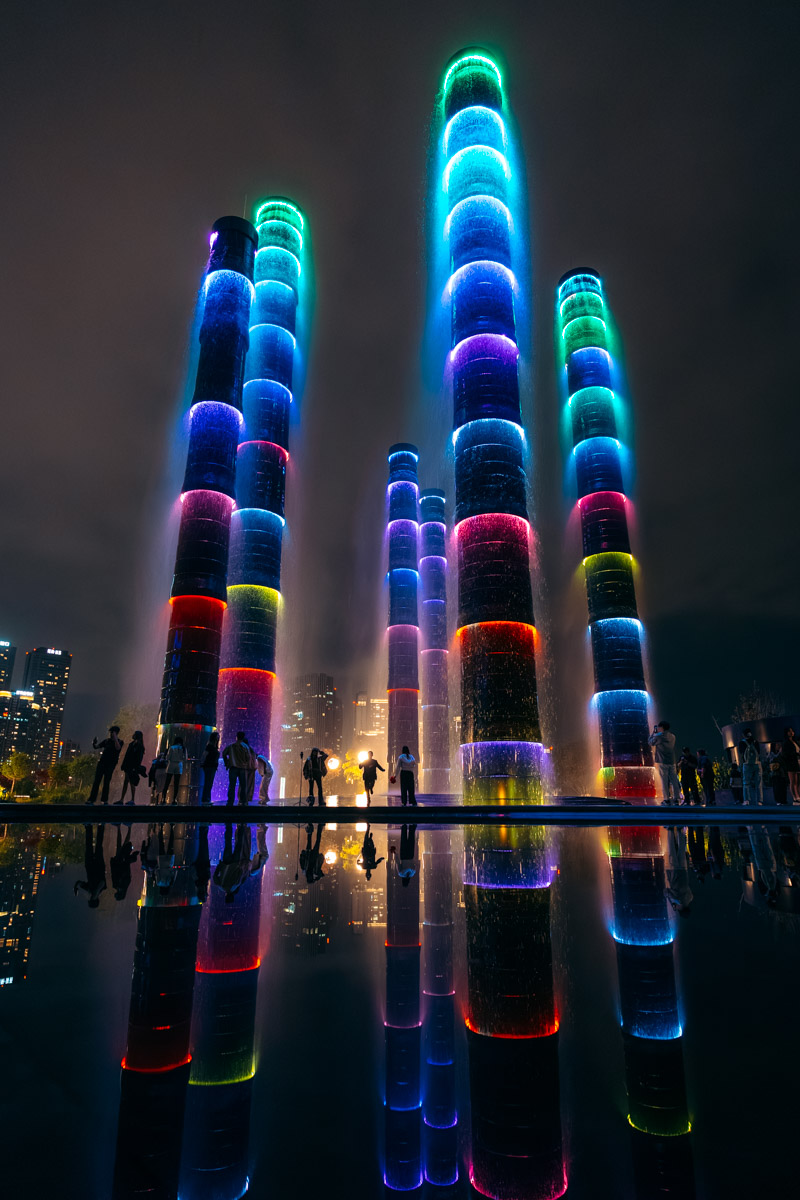
We arrived around 8:30 pm, and before long, the crowds started getting noticeably busier. That was our cue to call it a night.
But the towers aren’t simply an Instagram-worthy installation. Known as the Tower of Vitality, the artwork was designed as a symbol of Chengdu’s connection between water, nature and modern life. Its bamboo-inspired form pays homage to Sichuan’s long association with bamboo, while the flowing water and changing lights represent the city’s vitality, growth and ever-changing future.
It’s a fitting installation for Chengdu: a city where ancient traditions and modern innovation seem to exist side by side.

After spending the day surrounded by traditional architecture, historic temples and old-fashioned teahouses, the enormous bamboo-inspired water towers felt like a complete change of scenery.
Day 3 — Day Trip to Dujiangyan
For our third day in Chengdu, we ventured outside the city to Dujiangyan, home to one of China’s most impressive ancient engineering projects. The Dujiangyan Irrigation System was built over 2,000 years ago and is still functioning today, helping control the Min River and irrigate the fertile Chengdu Plain.
It’s an easy day trip from Chengdu, and if you’re interested in history, engineering or getting a glimpse of Sichuan beyond the city, I think it’s well worth adding to your itinerary.
Getting from Chengdu to Dujiangyan
First things first: bring your passport!
You’ll want to have it with you even if you’re only taking a day trip, particularly if you’ve booked your train tickets in advance. China uses your passport information when purchasing train tickets, and you may need your passport again when entering the station or boarding your train.
Unless you’re taking a DiDi directly from Chengdu, the train is an incredibly efficient way to cover the distance. We took the metro to Xipu Railway Station, one of Chengdu’s regional rail stations, and caught a train from there to Dujiangyan. The journey itself took us just over 1.5 hours, only because of us taking the metro early to guarantee we had plenty of time to catch the regional train we had already booked. But it beats sitting in traffic for 1.5-2 hours at a much higher cost!
We booked our train tickets in advance through trip.com rather than waiting until we arrived at the station. We did this mostly as a precaution, just in case trains sold out. Tickets can be in higher demand on weekends and holidays, so booking ahead isn’t a bad idea.
Since we’d already purchased our tickets, we made sure to arrive at the station with plenty of time to spare and, most importantly, with our passports in hand to get through the platform gates. For the way back to Chengdu, we did keep some flexibility and simply bought train tickets on the spot at one of the train stations in Dujiangyan.
Stop at the Viral Zhongshuge Bookstore
Once we arrived in Dujiangyan, we grabbed a taxi for the short ride to Sunac Mall. We were here early enough that many of the stores were only just opening, but we headed upstairs to the second floor to find one of Dujiangyan’s most viral attractions: the Zhongshuge Bookstore.
Once we arrived in Dujiangyan, we grabbed a taxi for the short ride to the local Sunac Mall. Stores were only just opening up as we were here before 10am, but we headed upstairs to the 2nd floor to find one of Dujiangyan’s most viral attractions: the Zhongshuge bookstore. We were here to see what the hype was all about and to check it out for ourselves, and honestly, it was a beautiful find.
Lined with books from floor to mirrored ceiling in the lower entrance area, it’s already stunning. The lighting makes you feel cozy, warm and embraced by the pages, but as soon as you enter the main area, your eyes are drawn much further up. A staircase spirals up from the main floor to the second mezzanine while books upon books line the shelves, covering the entire walls with the mirror-tiled ceiling now hanging at least 30 ft above you. Gorgeous archways encircle the main area, allowing you to pop in and out of different pockets of the bookstore.

The mirrors make the bookstore look even more grand as if there were no ceiling at all and the columns of books went on forever. The store not only has books (which are in Chinese) but tons of toys, 3D bookends, games, plushies and knick knacks that made my fingers itch to grab and buy. I honestly would’ve contemplated purchasing a few had Chengdu not been near the beginning of our two-month trip.
Where some of the facade started coming apart was when we looked closer and noticed that most of the higher sections of walls and columns that appeared to have books shelved were in fact wallpapered. I mean, no one’s going to be climbing a 25-ft ladder to place all those books, but it did seem a little gimmicky.
About 5-10 minutes of the bookstore opening, the hoards of tourists started pouring in. And you know what most of them came rushing in for? If you said Instgram-worthy shots of them on the spiral staircase in the middle of a fantasy dream bookstore, then you are correct!
Zhongshuge itself was undeniably stunning, but I’ll admit that the sheer number of people there to take photos and videos took away from the experience a little. And yes, we were absolutely part of the problem! We had to snap our own photos and videos too—you know, to show you guys of course.
Explore the Dujiangyan Irrigation System
From Sunac Mall, we made our way to the Dujiangyan Scenic Area.
The irrigation system dates back to around 256 BC, when Li Bing and his son designed a system that could control the Min River without completely damming it. Instead, the project uses a combination of channels, levees and natural topography to divert water, control flooding and distribute water to the surrounding agricultural land. More than 2,000 years later, it’s still in use.
One of the highlights is crossing Anlan Suspension Bridge, also known as the Couple’s Bridge. The bridge has a long history at Dujiangyan, with earlier versions made from bamboo rope and wooden planks. The bridge’s design is particularly fascinating because of its intricate construction and the way it spans the river between the banks and the central island. Historically, it provided an important crossing over the irrigation system, replacing a difficult ferry route.
The entire scenic area combines the engineering itself with beautiful river views, temples, gardens and forested hillsides, so it doesn’t feel like you’re simply walking around looking at an ancient infrastructure project.
Practical tip: The Dujiangyan Scenic Area currently costs ¥80 per adult. It’s open approximately 8:00am to 6:00pm from April to October, and generally 8:30am to 5:30pm from November to March. Allow at least 1.5–2 hours for the main route, although I’d budget closer to 3 hours if you want to explore at a leisurely pace and stop for photos.
Stay Until Dark for the “Blue Tears”
If you’re visiting later in the day, there’s another reason you may want to stick around after sunset. At night, sections of the Dujiangyan water system can take on an incredible blue glow, earning them the nickname “blue tears.” The illuminated water creates an almost otherworldly effect as it flows through the ancient irrigation system.
It’s one of those sights that’s completely different from seeing Dujiangyan during the day, so if your schedule allows, it’s worth considering an evening visit rather than rushing back to Chengdu.
Wander Through Jiezi Ancient Town
Rather than waiting around until nightfall, we decided to cross the river and explore Jiezi Ancient Town instead. Jiezi is a historic town in the wider Dujiangyan area, known for its preserved Western Sichuan architecture, old stone streets and waterways. The ancient town itself is free to enter and can easily be explored on foot.
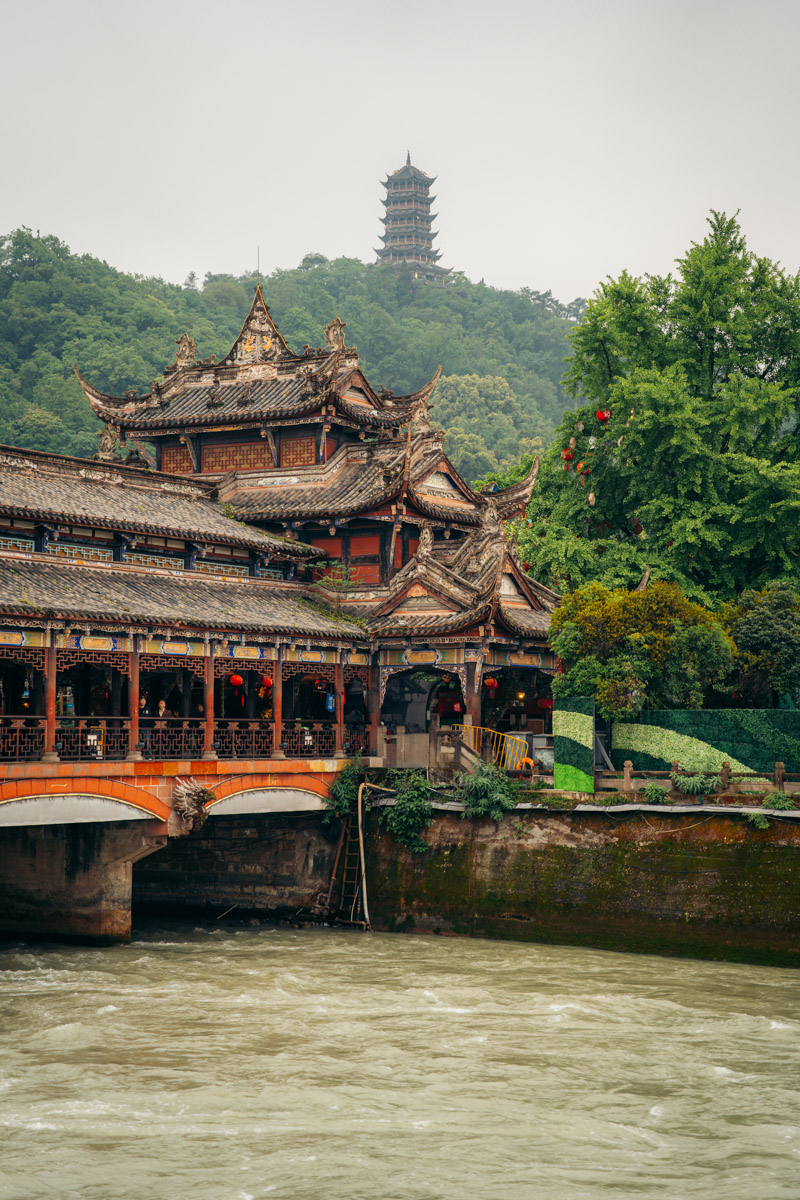
Compared with the polished historical streets we’d visited in Chengdu, Jiezi felt noticeably smaller and less manicured. And honestly, that was part of its charm. There were still shops, restaurants and plenty of places catering to visitors, but it felt more lived-in. Locals were going about their everyday routines, tending to their homes and shops, and generally just getting on with life.
That made Jiezi feel more authentic to us than some of Chengdu’s heavily restored tourist streets. Instead of feeling like we were walking through a historical attraction built entirely for tourists, it felt like we were wandering through a real town that happened to have a beautifully preserved historic centre.
And this ended up being our final part of the Dujiangyan day trip, and of our Chengdu itinerary as a whole! Hopefully you’ll enjoy this little gem of a town as much as we did, even though it might not be as picture perfect as Chengdu itself.
What to Eat in Chengdu
Chengdu is a dream destination for food lovers, especially if you enjoy bold, spicy flavours. Sichuan cuisine is known for its combination of heat, spice and the distinctive numbing sensation of Sichuan peppercorn, so come hungry and don’t be afraid to try something new!
- Dan Dan Noodles: One of my personal favourites! These dry noodles are tossed in a savoury, spicy sauce with Sichuan peppercorn, preserved vegetables and minced pork. They’re packed with flavour and make for a delicious quick meal.
- Sichuan Peppercorn: You can’t visit Sichuan without trying its famous peppercorn at least once. The tingling, numbing sensation is definitely an acquired taste, so don’t worry if you’re not a fan! It’s part of what makes Sichuan cuisine so unique.
- Sichuan Hot Pot: We already mentioned this earlier in the itinerary, but it’s worth repeating: you have to try Sichuan hot pot in Chengdu. The bubbling, spicy broth and endless selection of ingredients make this one of the city’s quintessential food experiences.
- Mapo Tofu: Another Chengdu classic we mentioned earlier, mapo tofu is a must-try if you enjoy spicy food. The silky tofu, minced meat, chilli oil and Sichuan peppercorn come together for an incredibly flavourful dish.
- Kung Pao Chicken: This might be the Sichuan dish you’re most familiar with, but don’t be surprised if it tastes different from the version you’re used to back home. Authentic Sichuan kung pao chicken tends to be savoury, spicy and packed with Sichuan peppercorn, rather than the sweeter version commonly found in Western Chinese restaurants.
- Zhong Dumplings: These Chengdu-style dumplings are served with a sweet, savoury and spicy chilli sauce. They’re a great snack when you want to sample something small between sightseeing stops.
- Sichuan-style Cold Dishes: Don’t overlook the cold dishes! You’ll find everything from spicy cucumber and shredded chicken to cold noodles, often drenched in chilli oil and fragrant seasonings. They’re refreshing in their own spicy way.
- Sichuan BBQ: Look for skewers of meat, vegetables and tofu grilled over charcoal and generously coated in Sichuan spices. They’re particularly fun to grab as a late-night snack.
Thanks for Reading!
And that’s a wrap! I hope this packed in everything you need to know before setting off for Chengdu, China, and that you’ll come to love Sichuan as much as we do. From savoury foods with a real kick to melting at the sight of adorable pandas, sipping tea from the Sichuan mountains like they did thousands of years ago by the water in People’s Park to getting misted with water by 120-ft luminescent bamboo water towers, it’s an epic city to explore.
If you’ve got any questions that I didn’t address, feel free to drop them down below in the comments!